Dental Implants Explained: The Closest Thing to Natural Teeth
Losing a tooth affects more than your appearance. It can change the way you chew, speak, and smile. Over time, a missing tooth can also lead to bone loss and shifting teeth, quietly impacting your long-term oral health.
Dental implants have changed what’s possible in modern dentistry. Designed to replace both the root and the visible part of a tooth, implants look, feel, and function in a way that closely mirrors nature. For many patients in Aurora, they are the most complete solution available.
What Exactly Is a Dental Implant?
A dental implant has three main parts:
- The implant post – A small titanium screw placed in the jawbone. This acts as an artificial tooth root.
- The abutment – A connector piece that attaches to the implant.
- The crown – The visible, custom-made tooth that matches your smile.
The key to an implant’s success is something called osseointegration. This means the implant bonds with your jawbone as it heals. Once fused, it becomes stable and strong, just like a natural tooth root.
With a success rate of over 95%, dental implants are considered one of the most reliable treatments in dentistry today.
Why Dental Implants Feel So Natural?
What makes implants different is stability.
Because they integrate with the jawbone, they:
- Do not slip or shift
- Do not rely on neighboring teeth for support
- Restore nearly full chewing power
- Maintain natural speech clarity
There is no bulky appliance and no adhesive. The crown is custom-shaped and color-matched, so it blends seamlessly with surrounding teeth. Most patients say that once healing is complete, the implant simply feels like their own tooth again.
The Health Benefits Go Beyond Appearance
A missing tooth doesn’t just leave a gap. It changes how your jaw functions.
When a tooth root is gone, the surrounding bone begins to shrink. Over time, this can affect facial structure and bite alignment. Dental implants help prevent this by stimulating the bone, keeping it active and strong.
Here’s what that means long term:
- Prevent bone loss
When a tooth is missing, the jawbone in that area begins to shrink. Implants stimulate the bone like natural roots, helping preserve strength and density. - Maintain facial structure
Bone loss can subtly change the shape of your face over time. Implants help maintain natural contours. - Protect surrounding teeth
Unlike traditional bridges, implants don’t require reshaping healthy neighboring teeth for support. - Keep your bite aligned
Missing teeth can cause nearby teeth to shift. Implants hold your smile in proper position. - Provide long-lasting results
With good oral hygiene and regular checkups, dental implants can last for decades.
Unlike traditional bridges, implants do not require reshaping healthy adjacent teeth. They stand independently, protecting the rest of your smile.
Different Implant Options for Different Needs
Dental implants are flexible solutions. The treatment depends on how many teeth are missing and your overall oral health.
Implant Crown
Ideal for replacing a single missing tooth. A custom crown attaches to one implant post, restoring both strength and appearance.
Implant Bridge
Used when multiple teeth are missing in a row. Implants anchor the bridge without affecting neighboring natural teeth.
Overdentures
Removable dentures that snap securely onto implants. They provide greater stability and comfort than traditional dentures.
All-on-4
A full-arch solution that uses four implants to support an entire set of fixed teeth. Often recommended for patients missing most or all of their teeth.
Precision Planning Makes a Difference
Successful implant treatment begins long before placement.
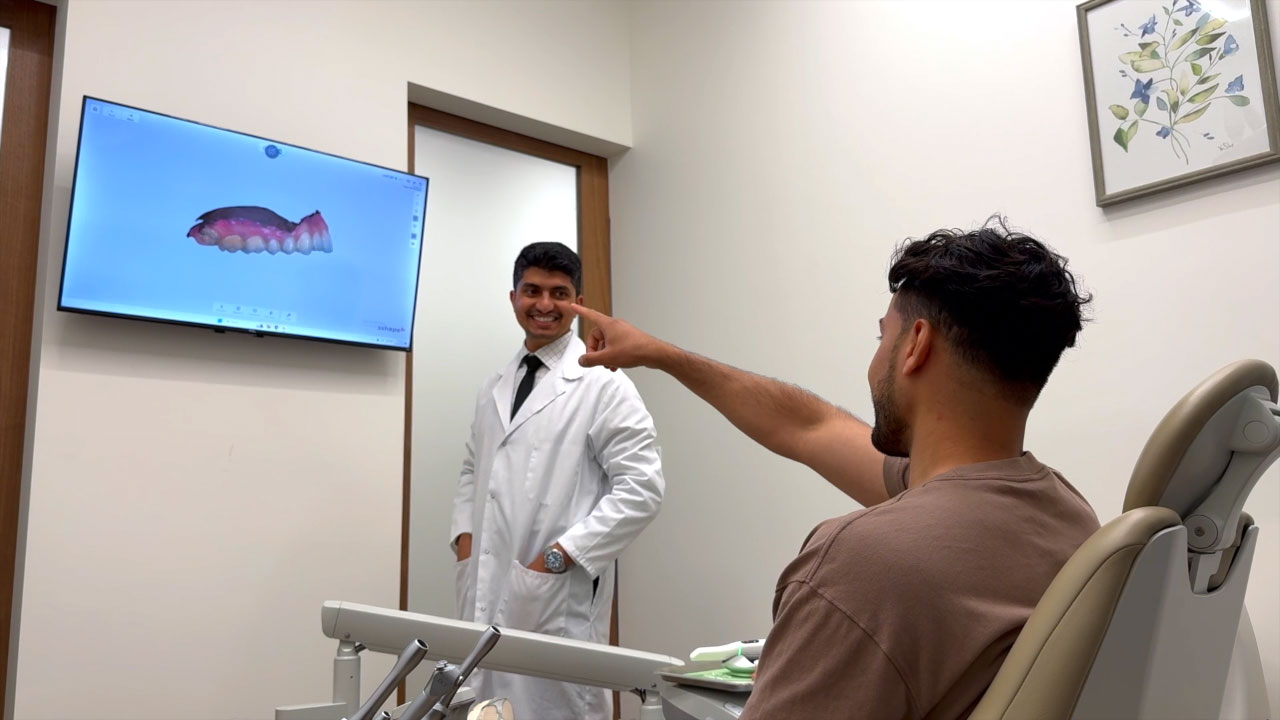
Modern dentistry uses 3D imaging technology called CBCT, or Cone Beam Computed Tomography. This advanced scan provides detailed views of bone density, nerves, and surrounding structures. With this information, dentists can plan precise implant placement and reduce surgical risks.
In many cases, implants can even be placed immediately after a tooth extraction. This approach, known as immediate implant placement, helps preserve bone and shorten the overall treatment timeline when conditions are ideal.
What About Comfort and Recovery?
One of the most common concerns is discomfort.
The procedure itself is performed under local anesthesia. Most patients report that healing feels similar to recovering from a tooth extraction. Mild soreness is normal, but it is typically manageable and short-lived.
Long-term care is straightforward:
- Brush twice daily
- Floss daily
- Attend regular dental checkups
- Wear a night guard if you grind your teeth
With proper maintenance, dental implants can last for decades and often a lifetime.
Are You a Candidate for Dental Implants?
Many adults with missing teeth qualify for implants. Healthy gums and adequate bone density are important factors. Even if you were told in the past that you were not a candidate, advancements in technology and techniques may have expanded your options.
A comprehensive evaluation, including digital imaging and a review of your medical history, helps determine the right path forward.
A Long-Term Solution for Patients in Aurora
For patients exploring tooth replacement options in Aurora, dental implants offer something unique: stability, longevity, and a solution that supports both function and long-term health.
At Smile Circle Dental, Dr. Amjad Ali and Dr. Naela Sayeeduddin use advanced planning technology and a personalized approach to help patients restore their smiles with precision and comfort. If you’re considering dental implants and want to understand whether they’re right for you, scheduling a consultation is the next step toward rebuilding your smile with confidence. Book online or call (630) 757-3100.